
 Your city, never your address
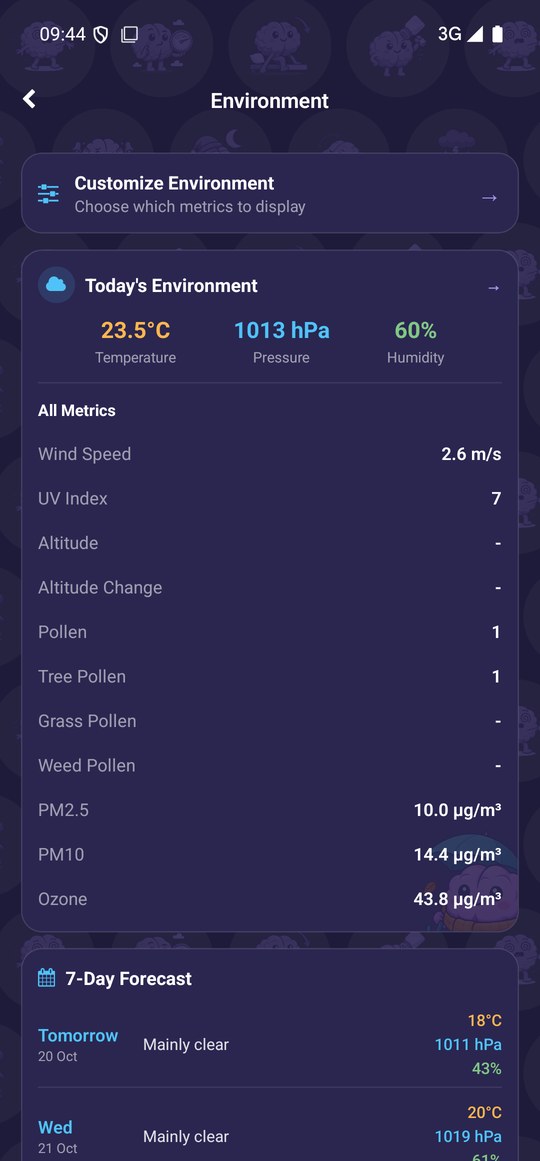
Location is read at city level only and used for weather and altitude alone. Pressure, temperature, humidity, wind, UV and thunderstorm days are switched on when you allow location; pollen and air quality (PM2.5, PM10 and ozone) are available in Data if you want them. Each day is stored and plotted under Monitor and Environment.
 Heat, and the water that goes with it
A hot day on its own is one line in the comparison. The water you drank on it is another, from a linked food app or the Not enough water tap, so a hot week and a dry week can be told apart in What Happened. The app does not add them up into a verdict for you; it tests each one.
 Tested like everything else
Pressure, temperature and humidity high and low, UV, altitude and altitude change are collected triggers. What Happened then shows whether any of them went with your flares, or that there is no link. Under Monitor and Environment a Premium card lists the next seven days of weather for your city.
Where it lives in the app
Monitor and then Environment: the day's conditions at the top with a thunderstorm banner on storm days, a list for temperature, pressure, humidity, wind, UV, altitude and altitude change, and the history with your flares laid over it. The seven-day weather card sits there too, and the pressure drop card appears on Home on the day it applies.
What it needs from you
Location, at city level only, never your exact address, used for weather and altitude alone. Skip it and the weather layer stays empty while everything else carries on. Pollen and air quality are off until you switch them on in Data; the seven-day weather card is part of Premium.